
Categories
Parents Zone Parents Zone Parents Zone

What are the reasons why children are slow at doing their homework?

What are the reasons why children are slow at doing their homework?

https://www.shutterstock.com/zh/image-photo/asian-elementary-schoolboy-thinking-while-doing-596186087

Source:Dr Hui Lung Kit

Whether for children or parents,
doing homework is the biggest problem. Even during the summer break, many
parents find it a headache. Parents often fight with their children, which
worsens their relationship. In fact, there are three main reasons for slow
homework.

First, excessive activity. At home,

children frequently run around, climb up and down, and run from the bathroom to
the kitchen, then to their room. They never stop, like a motorcycle moving
around. Imagine how painful it is to make them do their homework. If you give
them a table and chair, they will never sit still. When they finally settle
down, they keep fidgeting and moving their bodies, like they have ants in their
pants.

To start doing homework, they pick

up the pen and say they need to go to the bathroom, then say they need to pee,
poop, or that they are hungry and need to eat something. They always have an excuse
to leave the chair. It usually takes them 1 to 2 hours to settle down to do
homework, which is called excessive activity. Children who are excessively
active will definitely do their homework slowly, not because they are slow, but
because they need more time to settle down.

https://www.shutterstock.com/zh/image-photo/stressful-asian-woman-laptop-sitting-on-1152046592

For older children, like middle school students or upper elementary school students, they may not necessarily run around, but they often shake their legs, constantly shaking to the point where the whole table is moving. For example, they may spin their pen around and around. Don’t underestimate this leg shaking, pen spinning, and body moving actions; they are actually symptoms of hyperactivity.

Secondly, they have weak concentration. Children with insufficient concentration may be able to sit down, but they stare at you like a cloud, daydreaming, completely unaware of what they are doing. They hold a pencil and look at their homework, but they are just looking at it and can never absorb the first question. So they may be able to sit down, but they will always stay on the first question, constantly distracted by phone calls or doorbells, and they can never focus.

Some parents have complained to us that if it is a hyperactive child, they will need to walk around in the first hour, and children with poor concentration will be daydreaming for the first hour, and it will take until the second hour before they can continue, and they will do it very slowly.

https://www.shutterstock.com/zh/image-photo/9-yearold-little-asian-girl-sitting-1407273545

Thirdly, weak reading and writing ability. You may have heard of reading and writing disorders, which are more severe cases. However, some children do not have reading and writing disorders, but their reading and writing abilities are weak. This includes Chinese, English, and mathematics, including reading and writing. It seems difficult for them to read and spell, and they can never seem to remember simple words. Writing is always reversed; left and right are reversed, just like in a mirror, and some even turn things upside down.


These types of children can sit still and will do so when asked. They can also concentrate well. But what happens? They will sit and do their homework, but they will sweat profusely while doing so. However, after completing their work, every question is wrong, and they cannot remember or understand anything. This may be due to reading and writing problems, which can slow down their homework.

https://www.shutterstock.com/zh/image-photo/person-leads-finger-on-lines-book-1864366570

I just mentioned three reasons, which one is it exactly? Of course, some children may have all three, but if parents can pay attention, they shouldn’t just blame the child. When he is working slowly, first pay attention to which of the three reasons the child belongs to. If you know which reason he belongs to, then we can prescribe the right treatment and get twice the result with half the effort.
Categories
news

[十八有藝 – Tuen Mun Community Performing Arts Project School Puppet Interactive Demonstration Performance]

[十八有藝 – Tuen Mun Community Performing Arts Project School Puppet Interactive Demonstration Performance]

In order to cooperate with the project study to understand Chinese culture and art💖,
encourage children to learn extracurricular knowledge, enrich and enrich life experience✨.

Deliberately participated in the [十八有藝 – Tuen Mun Community Performing Arts Project]
school puppet interactive demonstration performance on February 20 (Monday),
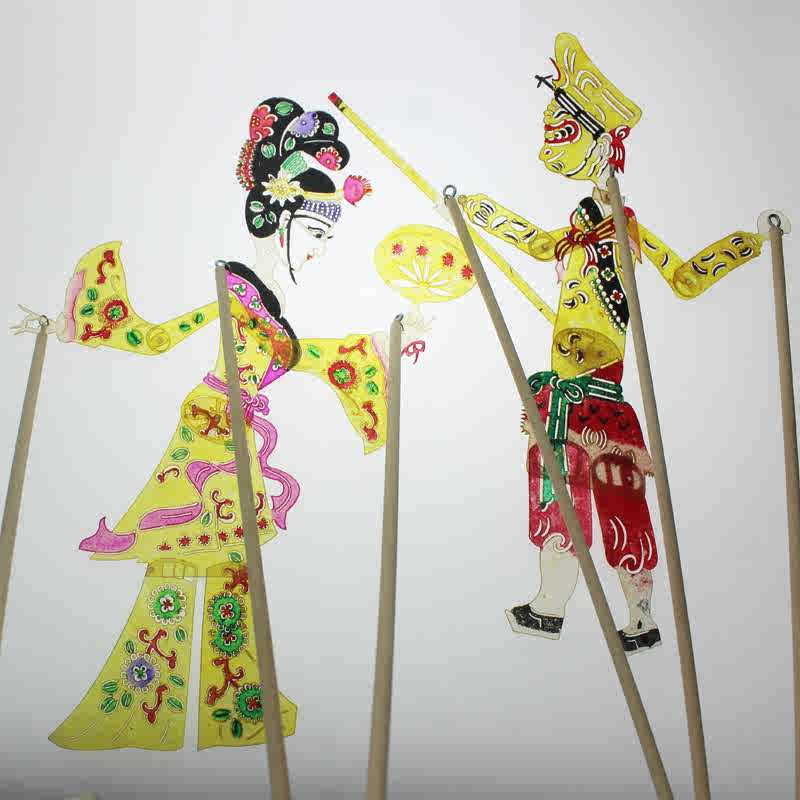
It is an opportunity for young children to learn about the cultural heritage of
traditional Chinese puppets, and to bring performing arts to students.

On the day of the event, the teacher led the K3 children to Yan Chai Hospital Ho Sik Nam  Primary School
to enjoy the puppet performance with the brothers and sisters🎥, Also tried to play with different styles
of hand puppets 🐶, which made us so happy from ear to ear,

Experienced a fun and memorable learning journey 🥰.

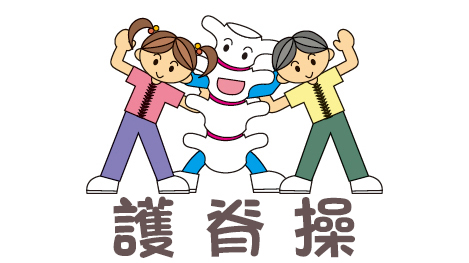
【”Let the child stand upright” Spinal Care Parents Workshop】

【”Let the child stand upright” Spinal Care Parents Workshop】


In recent years, the epidemic has reduced students going out 🏠, staying at home for a long time and lack of exercise 🏃,

Caused a lot of posture and spine problems. In order to improve the posture of school children and promote the health of the spinal nerves 💪,

On February 11th (Saturday), our school invited the Children’s Chiropractic Foundation to hold a  “Let the Child Straighten” Spinal Care Parent Workshop.

In order to enhance the spine care knowledge of school children and parents and establish spine care habits💖.

On the day of the event, children and parents actively participated👍, and they also did spine exercises together to keep fit 😍!


Look ! How much fun we had ! 🥰

【Class N and K1 Parent-child Outdoor Experience Day (Dragon Park)】

【Class N and K1 Parent-child Outdoor Experience Day (Dragon Park)】

In order to coordinate with the extended project learning activities of the Chinese New Year, Class N and K1 children, accompanied by their parents, went to Tin Shui Wai Dragon Park for a parent-child outdoor experience day on February 9 (Thursday).

On that day, the teacher led the children and parents to visit the Chinese pavilion⛩,
Watch the surrounding green environment🌳 and look for the animals that can be seen in the garden🐦🐠,
Let’s explore the mysteries of nature together under the refreshing beauty🌎,
Expand the relationship between nature and life🌻,
And through parent-child interaction to deepen children’s understanding of Chinese culture,
Enrich the learning content of the topic 💖.

Here, I would like to thank all parents for your participation 👨‍👩‍👧‍👦, with your colleagues,
I believe that children’s learning will get twice the result with half the effort✨.
In the days to come, we look forward to parents participating again💪,
Give full play to the spirit of family-education collaboration🤝, and work together to cultivate seedlings to grow happily🌱.

“Golden Bauhinia Cup Hong Kong Children’s Chinese New Year Painting Competition Award Presentation Ceremony”

“Golden Bauhinia Cup Hong Kong Children’s Chinese New Year Painting Competition Award Presentation Ceremony”


📣Good news! good news! 📣


Our garden is honored to participate and was honored by “Yan Chai Hospital”, “Tung Wah Group of Hospitals”, “Po Leung Kuk”,
Jointly organized by “Pok Oi Hospital”, “Yan Oi Tong” and “Kowloon Lok Sin Tong”
“Golden Bauhinia Cup Hong Kong Children’s Chinese New Year Painting Competition Award Presentation Ceremony”.

Congratulations to our students from class N, Hailey Chan Yu Ching, class K3 , Mason Lai Kei Hang, Kimchi Tse Tsz Ching, Emily Fu Hei Man, Alvin Pang Ching Fung, Dincent Zeng Fan Chiu and Eunice Cheung Sum Yu won the “Golden Bauhinia Cup Hong Kong Children’s New Year Painting Competition” awards🎊

Congratulations to all the award-winning kids🥳🥳🥳🥳🥳🥳
At the same time, I appreciate the participants who participated in this painting competition, thank you for your dedication and hard work,
You have to keep working hard! Looking forward to seeing your work next time!


#Kindergarten #Shan King Estate #Yan Chai Hospital Shan King Kindergarten #Drawing Competition #Winning school

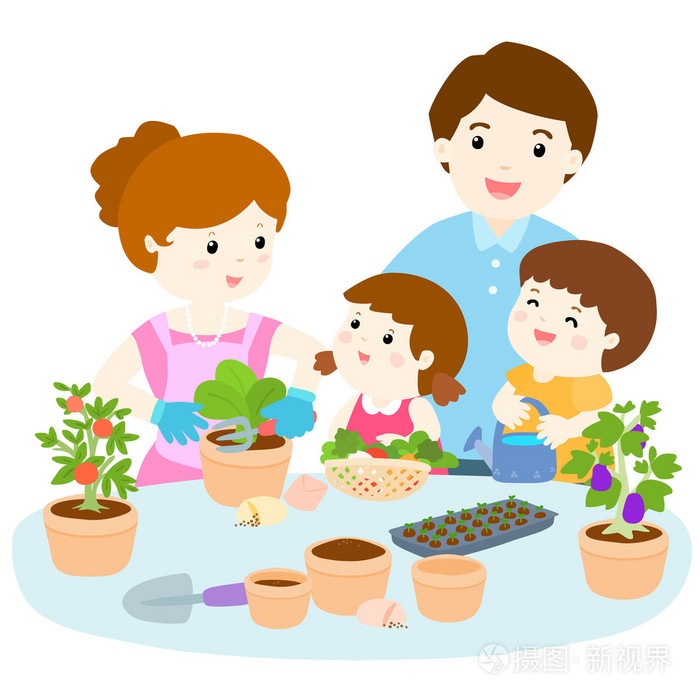
【Parent-child Planting Experience Day】

【Parent-child Planting Experience Day】

👶🏻Kids, do you know where delicious fruits and vegetables come from😍?
Our garden will hold a “Parent-child Planting Experience Day” on February 25 (Saturday),
We invite you and your family to come to our Mountain View Kindergarten and look at our small flower garden on the roof,
Appreciate and understand the growth process of different plants🌱!

At that time, you and your family are invited to experience the planting process 👨‍👩‍👧,
After the completion, you can get a small potted plant and go home to continue planting🏠,
Witness the growth process of small plants! 💖
Seats are limited, so hurry up and fill out the registration form to sign up! 🥳


Event registration form:
https://forms.gle/nDHa68p3vTP8p9ww8

What constitutes a language development delay in a child?

What constitutes a language development delay in a child?

Typically, babies start making sounds as soon as they are born, such as different crying sounds to express their demands. From 4 to 8 months, they start babbling, which is part of the language preparation period. Children actually go through a ladder of language development, starting with just learning single words and ending with being able to tell stories with their words.

Babies from 9 months to 1 year generally start producing their first meaningful word, such as “ba,”  “ma,” or “ball ball.” From 1 to 2 years old, their understanding and vocabulary expression increase greatly, with the accumulation of single words forming two-word phrases, such as “mommy drink” and “eat bun bun.”


From 2 to 3 years old, children generally speak in longer sentences and can express different needs. For example, they like to add a word to the two-word phrases, forming three-word combinations, such as “Daddy eat bun” and “I want grandma.” Some children start using adjectives, such as “sister eats a big apple.”

Source: Speech Therapist, Mok Yee Tuen

https://www.shutterstock.com/zh/image-photo/happy-mother-cute-baby-girl-studio-41484523

Young children generally recognize more different sentences and start using conjunctions after 3 and a half years old, and by 5 years old, they slowly understand how to combine different sentences and use more conjunctions and start to narrate things logically, that is, by telling stories.

In fact, the language development of young children is slightly different for each person, but through empirical research, we also have some important reference indicators to see if a child may have a speech delay.

The first is that there are no words at 2 years old.

Second, no sentences appear before the age of three.

The third is that speech is unclear and hard to understand after 3 years old,

Fourth, sentences are still unclear after 5 years old.


If the child is not speaking more and more as they grow, parents should seek the help of a professional to assess and train them as soon as possible.

https://www.shutterstock.com/zh/image-photo/happy-little-asian-girl-talking-on-448337638

Since childhood, children have learned the great method of storage and how to pack up toys without difficulty

Since childhood, children have learned the great method of storage and how to pack up toys without difficulty

https://www.shutterstock.com/zh/image-photo/attractive-beauty-lady-office-work-using-725715985

SourceTaiwan Professional organizing advisor, Yu Zhi Lin

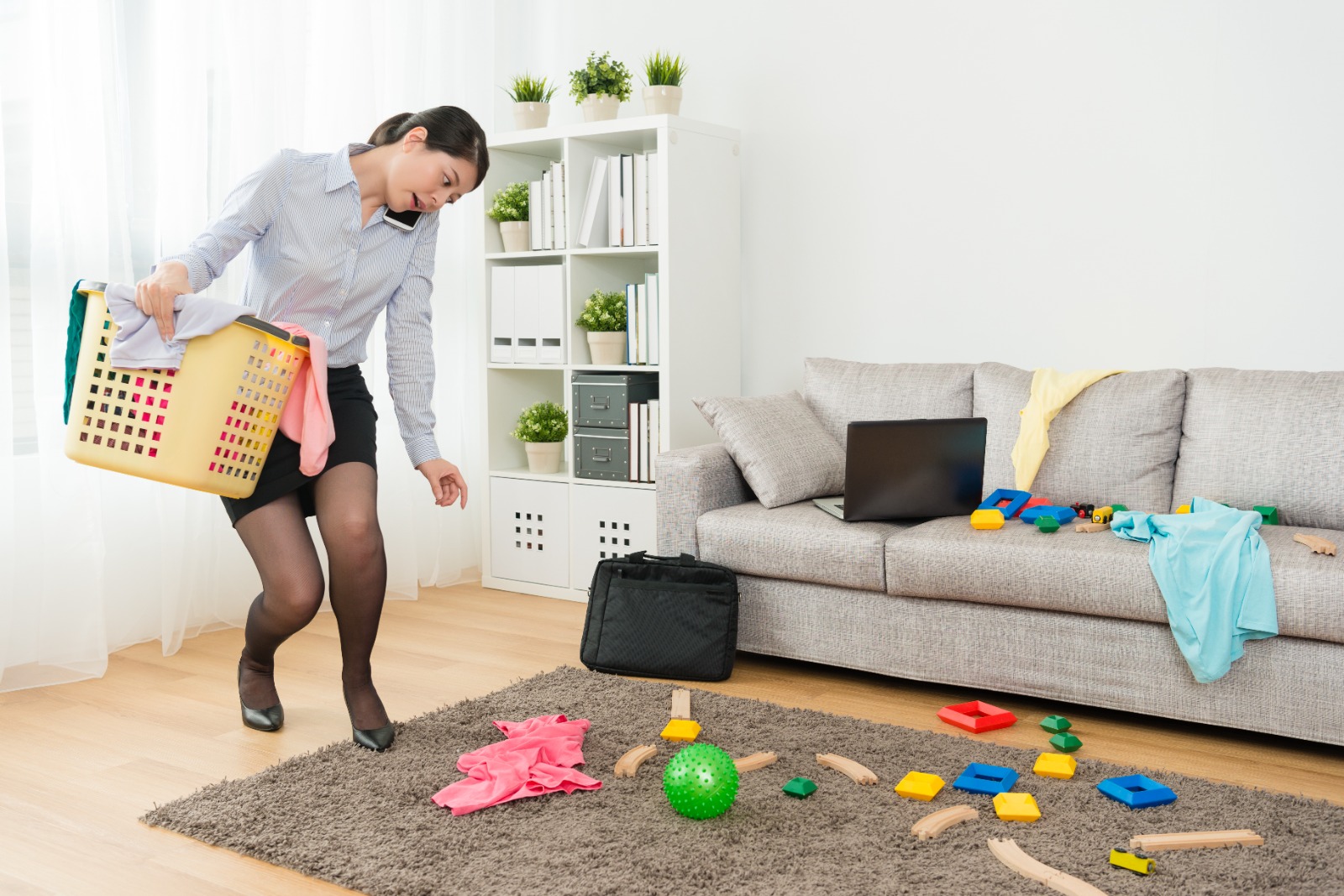
One of the parents’ nightmares is working hard to pack up the
toys every night, but the next morning they were scattered all over the floor
again. Pack up your stuff. How can parents teach their children to pack up
their toys?


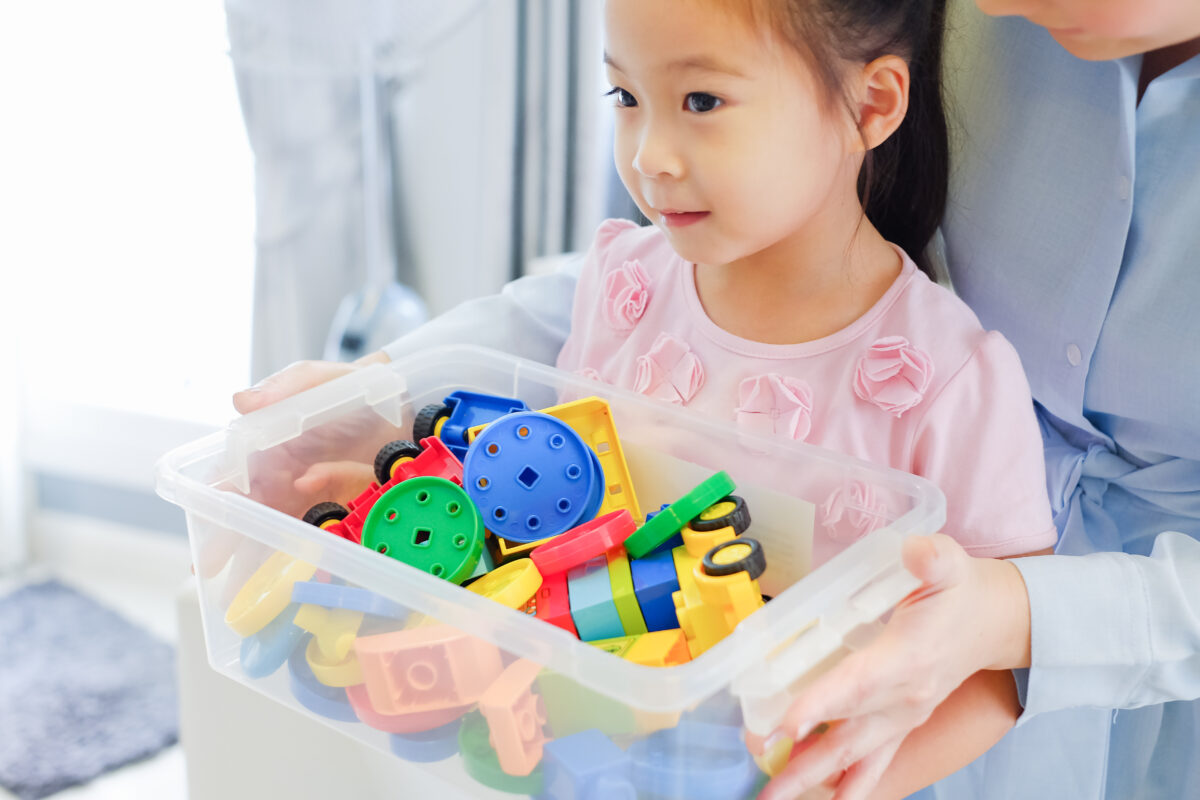
We decide how big the storage box should be based on the child’s
age, which is about 1 to 2 years old. To prevent children from putting toys in
their mouths, toys at this time are usually larger, so we need a slightly
larger storage box. When children are younger, our standards can be very low,
mainly to let them know that they need to clean up after playing with toys,
pack them up in the storage box, and put all the toys in it. At this age, we
need to train them to be tidy.

https://www.shutterstock.com/zh/image-photo/little-cute-asian-girl-playing-plastic-1026670537

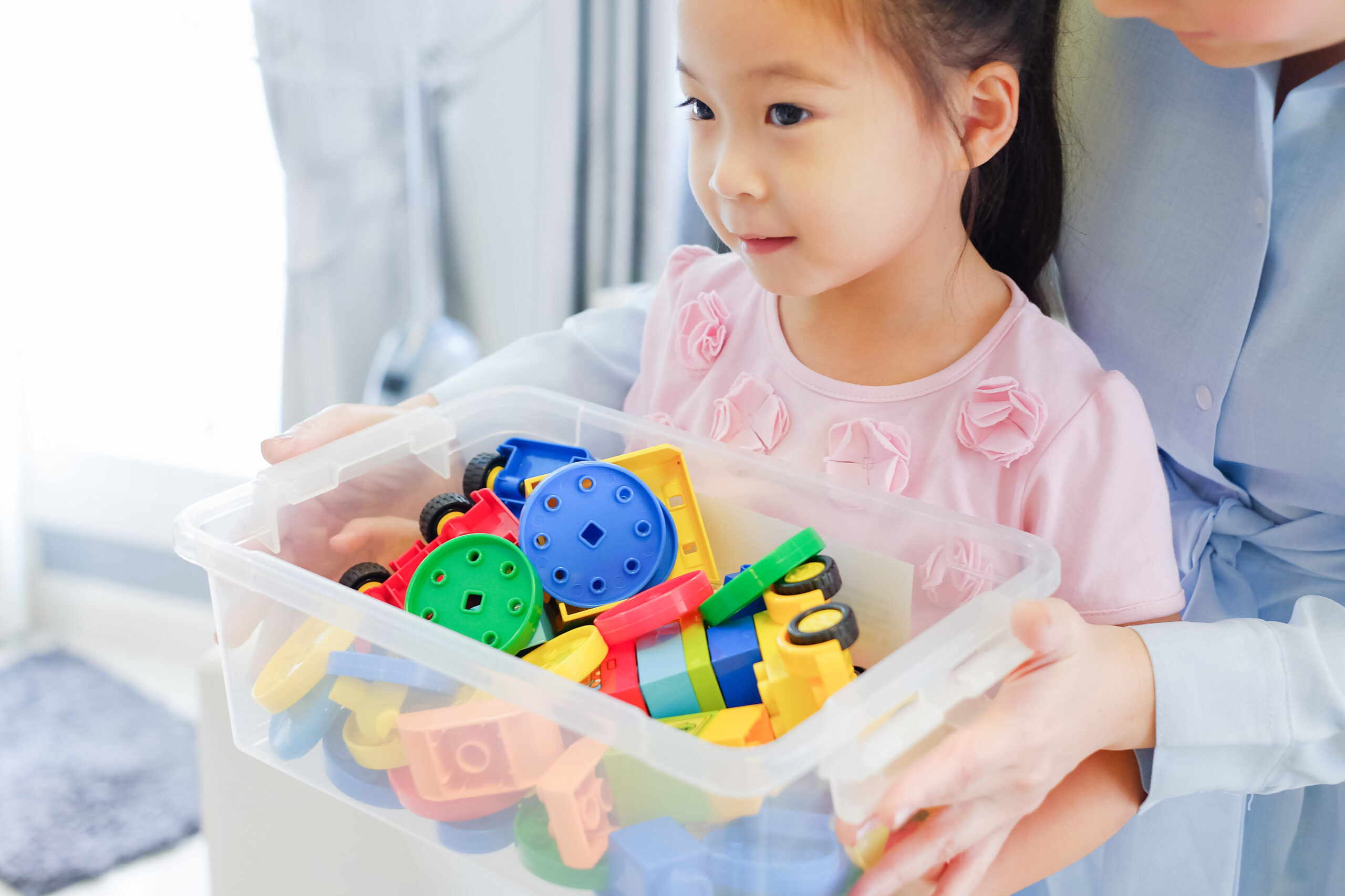
By the time children are a little older, about 3 to 5 years old, they can already have a preliminary classification. Know that there are different types of toys. At that time, the storage box does not have to be so big, we can change a smaller storage box, according to the different types of toys a little classification. We adjust the rules of the game a little higher; you can paste some classification labels outside the box, with patterns, colors, or word cards, so that children can easily identify. For example, a car, with a car pattern or a word card “Car”, so that children can slowly learn to remember this classification.

When children go to elementary school, they will have their own ideas and know what to put away where, so our storage box can become smaller. Then we can store many small things for children, such as little girls’ ornaments, small beads, and accessories for Barbie dolls. We can also use such a small box to sort, because after such a long time of training, children will find it very natural to clean up, and parents will also feel very relaxed.

Categories
Parents Zone

How can children learn to take care of themselves?


https://www.shutterstock.com/zh/image-photo/asian-cute-primary-school-girls-packing-2182915143

Source: Shirley Loo, Executive Director, Family Development Foundation

As we may notice, in today’s society, the children of the previous generation have grown up and are now working in society, but it seems that their parents are involved in many things. It made me think back to my own childhood—did our moms always take care of us in a pampering role? Did everything seem to be taken care of so well that the kids could just focus on school and academics?

In fact, this is definitely not a healthy phenomenon for the growth of children, but I also understand that mothers think that children do not need to care about anything, mothers take care of everything for you, remove any adversity and difficulties for him, establish a protection zone, and tell him to focus only on studying well. But being a good student is not the same as knowing how to be a good person. Both things should be balanced.

They may find it very profound to know how to behave. If you narrow it down, it means the ability to take care of oneself. Parents should know how to let go and let their children learn to take care of themselves; that is, if they know how to do things themselves, they should let them do as much as possible. For example, he knows how to pack his schoolbag, and how to put things into it. Of course, you have to teach him first and then let him do it.

This ability to care for oneself is also a survival skill; from the initial tying of shoelaces and packing of a schoolbag to growing up a little to take care of one’s own bookshelves and desks, and later applying to university, all are very basic survival skills. For example, what does it mean to “pack a schoolbag”? First, he must know how to write a handbook. He did not write everything down at first, but he can ask his classmates, and mothers can take the initiative to find different parents to chat with and compare the handbook with.

https://www.shutterstock.com/zh/image-photo/asian-little-kid-studying-table-1720118539

Second, check if he is shortsighted because many children do not copy properly because of eye problems. Third, in addition to the handbook being fully written, is how to organize in accordance with the timetable. Mom can demonstrate how to organize once a day before. The next day, ask him, “Get the General Studies book.” Slowly, he learns to organize, his mother can praise him, and some parents even use those reward tables. Give him a stamp if he packed the schoolbag today so that he has some sense of achievement. When he knows how to pack his schoolbag, it means he knows how to sort things.

Many times, parents are preoccupied with their own lives or work pressures, or their moods do not always remain positive. “Don’t do that; I’ll help you do it instead.” There will be times when there is no way; we will miss and be exhausted. But if you really do his homework for him, there is a risk because it’s dishonest and you don’t let him learn, because he would only learn and remember after making mistakes. I remember once a mother telling me that her daughter’s writing was crooked, so the mother kept erasing and breaking paper.

https://www.shutterstock.com/zh/image-photo/portrait-unhappy-mother-while-teaching-her-1525329908

I said, “You can use some creative methods to teach children in first grade.” I like to tell her that every word has its own home, and that home is inside the square. Those words like to return home, and you can help them be securely placed in their home. Parents need to be patient and wait for their children to improve slowly. Each child has his or her own pace of growth. I hope parents will respect the rhythm of their growth and respect their pace. In fact, while they are learning, we are also learning, so we can all progress together.

Categories
news news news news news

“Healthy Drinks at School” Charter

“Healthy Drinks at School” Charter

If you want to warm up in winter🌞, why not make a healthy drink yourself🥤🍹.
Our school refers to the “Healthy Drinks in School” charter provided by the Education Bureau’s Kindergarten Camp,
The healthy drink “Goji chrysanthemum water” recommended by the middle school.
Just in time for the campus garden to plant chrysanthemums in full bloom🌼💐🌷🌹🌺🌸,
Children are sincerely invited to pick 👩‍🌾 and explore the difference between fresh chrysanthemums and dried chrysanthemums.

The children found it very interesting that the dried chrysanthemums would bloom again after being soaked!
The children also worked together to make and taste the homemade 🌼”Goji chrysanthemum water”🌼

Look! They drank with gusto! Parents may also wish to make with their children at home
This simple and healthy drink nourishes the body and mind during the cold winter. 🧡👨‍👩‍👧‍👦