Are you a “competent parent”?

Are you a "competent parent"?

How can we know if we are competent parents? We can find out how the children get along with their parents and how they behave by observing them, and here are five things we can observe.

First, trust the parents. If a child trusts their parents, we can see it in their eyes and in their responses when they communicate with their parent. When a parent talks to a child, the child looks intently at the parent, understands what the parent is saying, and responds clearly with “Yes! I understand,” and then follows instructions. This means that parents usually have good communication with their children.

Parents often tell their children why they should do something, whether it is a good thing to do, or what they think of it. For example, “I think you did a good job when a child fell down and you walked over to pick him up right away.” When parents tell their children how they feel and praise them for doing the right thing, they will be more willing to listen to their parents’ feelings and reactions, and they will gradually build trust.


https://www.shutterstock.com/zh/image-photo/asian-family-two-children-relaxing-outdoors-2029834358 


Source: Senior Parenting Expert, Bally 
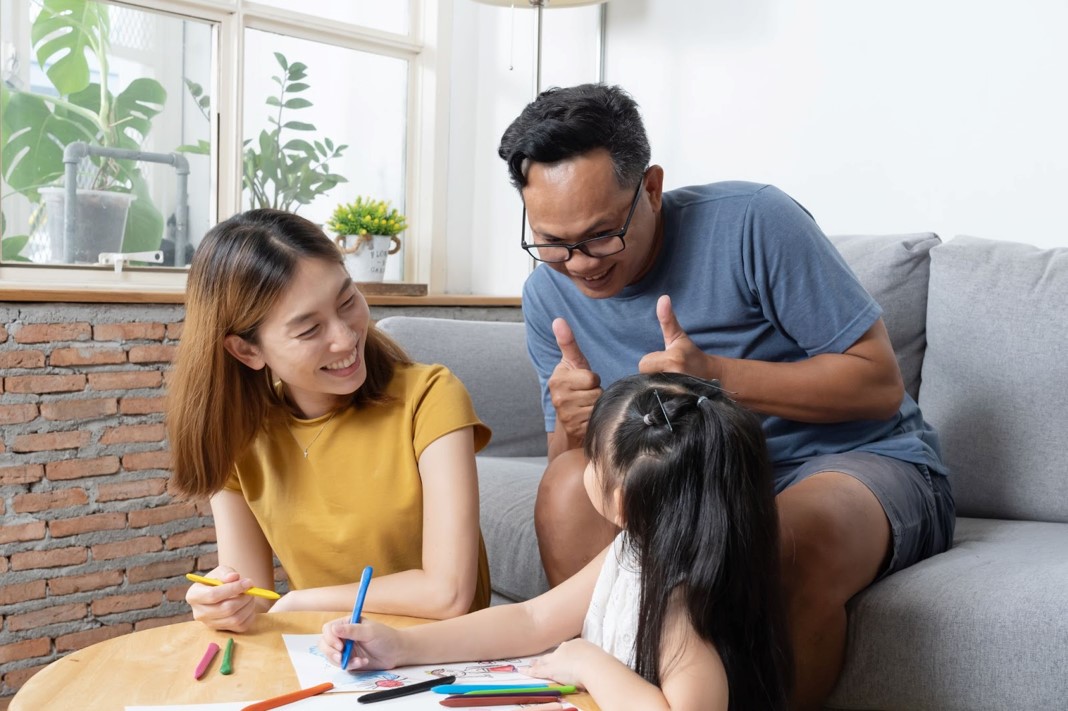
 

Second, be brave enough to tell your parents. If children are willing to tell their parents when they encounter certain situations, it proves that their parents give them a lot of space. They are not afraid of being scolded by their parents, and they believe that their parents will give them the right direction, teach them what to do, and accept their wrongdoing. Therefore, children will slowly do what their parents think is right under the safety net. Communication between parents and children is very important, and we need to give them confidence in order to build a harmonious relationship. No matter what happens to them, it is very important that they are brave enough to share with their parents what has just happened or how they feel.

Third, have self-confidence. How can we tell that a child is confident? If a child looks at his or her parents before doing something and gets a positive look from them before doing it, in this case, the child is obviously not confident enough because he does not know what is right and what is wrong.

When a child can do something confidently in different situations, the parents can see that they can first give affirmation and then slowly tell him whether it is actually right or wrong to do what he just did, which over time will build the child’s confidence. They will know that they do not always have to do something right, as long as they have confidence, they can try to do it first. We will slowly build children’s self-confidence by reminding them of this process.


Fourth, have empathy. If children have empathy in many cases, for example, when they see a child fall, they will go to help the child; when they see an old woman crossing the street, they will want to help her. The fact that he is so empathic indicates that his parents, who are a competent pair of parents, have brought this message to him in their daily lives. 


https://www.shutterstock.com/zh/image-photo/happy-activity-asian-family-daughter-drawing-2197242139 

Because our future education hopes that children will not only take care of themselves but also care for society and pay attention to everything in society, empathy is very important. If children are able to take care of themselves and other people around them in their daily lives, it is important to be empathetic. So parents better pay attention to their own way of dealing with children, because if we have empathy, children will naturally have empathy.

Fifth, the ability to take care of themselves children are capable of taking care of themselves, such as eating, dressing, putting on shoes, etc. This also means that their parents are really competent at their jobs because they have taught them “how to fish, not fish for them.” As parents, we should teach our children that they are capable of coping with their own daily lives. If a child does not learn to put on his or her own school uniform by the end of K2, he or she will lose self-confidence over time and have a tendency to become dependent, gradually losing the ability to take care of himself or herself. It is important to be a competent parent to teach children to take care of their own lives.


https://www.shutterstock.com/zh/image-photo/boy-help-each-other-run-on-380643181 
Children grow up to be fed instead? How can parents break it down?

Children grow up to be fed instead? How can parents break it down?

The parents begin feeding the baby milk and gradually introduce paste from the time the baby is born. Then children can start to hold their own utensils and eat on their own, one bite at a time while watching them grow up. But when the children reach the age of 6 to 7, they will suddenly ask their parents to feed them. What is the reason for this? How can this be resolved?

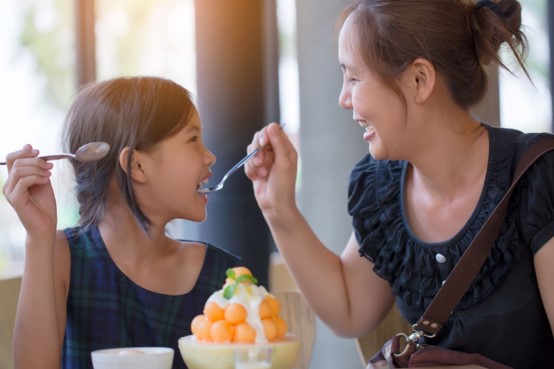
Whenever children grow up, their parents are happy, especially when their children eat. In the past, they had to be fed by their parents, but later they learned to use utensils and eat by themselves, which was originally a very happy thing. However, many parents do not understand that when children can eat on their own, they begin to ask their parents to feed them. This is because the intimacy of parental feeding feels good and may make children want to be fed.


https://www.shutterstock.com/zh-Hant/image-photo/happy-asian-daughter-mother-enjoy-eating-454504369 

Source: Psychotherapist, Lee Wai Tong


 When children are young, it is fun for parents to feed them, but when children grow up, it is a headache for parents if they still want to be fed halfway through a meal. We don’t want to spoil the atmosphere of the meal because of the feeding problem, so we need to learn that when children ask to be fed in the middle of a meal, we can solve the problem in the following ways:

Parents can say to their children, “If you take two more bites of rice, mommy and daddy will start feeding.” The next time the same thing happens, say, “If you eat three more bites, mommy and daddy will start feeding,” gradually shorten the time of parental feeding, and gradually extend the time of children eating on their own. Later on, there is a chance to finally just feed him a bite to maintain the intimacy of the parent-child relationship but also to make the eating atmosphere more interesting.


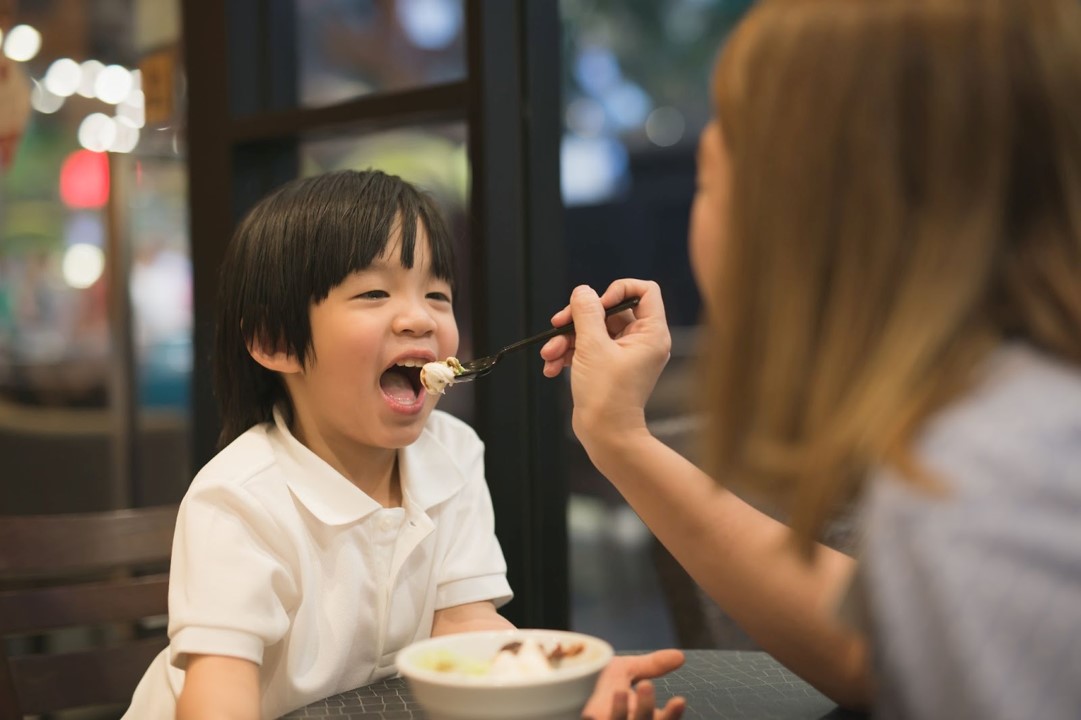
https://www.shutterstock.com/zh-Hant/image-photo/asian-mother-child-eating-ice-cream-610648187


Siblings often quarrel with each other and the role of parents is especially important.

Siblings often quarrel with each other and the role of parents is especially important.

In recent play therapy cases, several of the children’s emotional problems were related to their young siblings’ relationship. Most of these problems were not caused by major arguments, but rather by subtle interactions in which each child was seeking the mother’s attention, comparing how much positive feedback they received from each other, and comparing who the mother “loved” more! Children often fight with each other because they are jealous of their siblings and take the opportunity to vent their frustrations.

It is true that everyone is “biased” and so are parents. Both inborn and nurtured personalities can lead to a preference for certain behaviors and behavioral patterns. If parents do not think about this, they will not suddenly become more open-minded because their children are their own.

Parents may be more appreciative of certain traits and more resistant to certain traits in their children’s different personalities. This is understandable. The problem is that parents must be aware of this situation and be aware of it and allow themselves to grow beyond the narrow framework of their parental role, increase the breadth and width of their own vision, learn to appreciate the differences in their children’s personalities, and appreciate their children’s unique strengths from the bottom of their hearts, and pass them on in their daily lives so that their children can receive them and affirm themselves. This will prevent the problem of sibling rivalry from worsening and causing unnecessary jealousy and suspicion in children.

The mother’s role is especially important during the early years of a child’s life because the quality of the mother’s interaction with the child has a critical impact on the child’s self-worth and sense of security. In these recent cases, it was not uncommon to find that the children had a sibling in the family who was cheerful, understanding, and liked to express herself, and was well liked by adults and teachers. I could see the mother’s joy and pride when describing her child. No wonder the children in these cases often felt compared to the others because they were more introverted, reticent, shy and cautious.

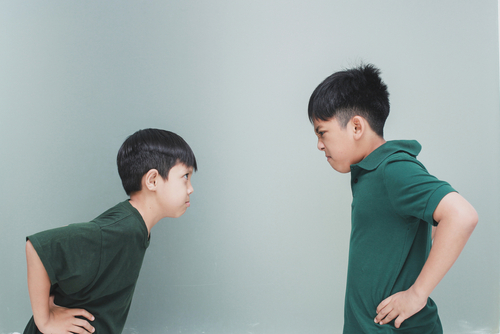
https://www.shutterstock.com/zh/image-photo/two-angry-siblings-looking-each-other-1982121473 


Written by :

Founder of Family Dynamics

Marriage and Family Therapist 

Children Play Therapist           

Ng Yee Kam


One mother was aware of the need to appreciate her son’s abilities, so she kept praising him, but in terms of character, she inadvertently encouraged her son to follow her sister’s example by expressing himself more and integrating into the group. However, this is not the nature of the child’s character and makes the child suspect that there must be something wrong with his or her character that cannot be accepted by the mother. This internal pain can easily turn into jealous emotions towards the elder sister, making the parents feel that the child’s attitude towards his/her sister is unreasonable, and further preventing the child from breaking out of this negative cycle.


I suggest that parents should not compare their children. For children who are more introverted, shy, reticent and cautious, they should be more reassuring: “ You do not need to force yourself to play with children like your brother, you quietly observe is already a kind of participation, when you feel at ease then go out to play is not too late. Or, “Not every child needs to be as talkative as their elder sister or like to perform in front of people; Mom likes it when you can express yourself as you see fit. “

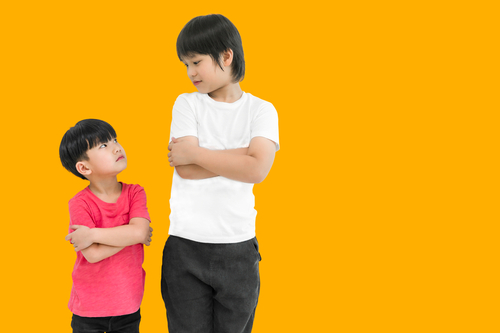
https://www.shutterstock.com/zh/image-photo/little-child-boy-tall-standing-arms-1758083429


For children who are more reactive and impulsive, listen to them first and then help them correct their behavior if it is safe to do so: “You are reacting so strongly to hit your brother, you must feel very angry inside, let me hear how you feel, okay? Sometimes parents do have to deal with their children “fighting for something,” but more often than not, what parents need to do is to meet their children’s psychological and emotional needs and affirm their true nature, so that their children can naturally get along well.

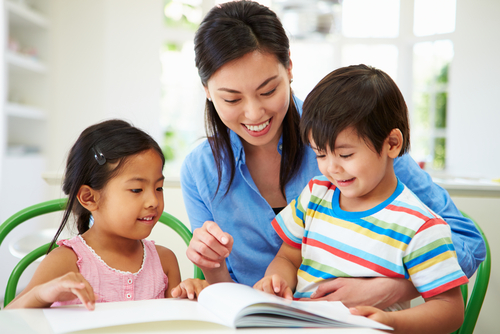
https://www.shutterstock.com/zh/image-photo/mother-helping-children-homework-177030086

Categories
news

🎄22-23 Christmas month🎄

🎄22-23 Christmas month🎄


🎄22-23 Christmas month🎄 has been successfully held🌟

The Christmas lights opened the children’s experiential “Caring Month” learning journey👫,

It was carried out in a strong festive atmosphere 🥳reporting good news and sending blessings💖👩‍🍳

Making French caramel eggs 🍮👨‍🍳Exchanging Christmas gifts🎁

It also jointly organized the 「仁濟夢飛翔嘉年華」 with the Tuen Mun District School of Yan Chai Institute! 🛩😍🎊,

 there are booths for parent-child games 🤩Physical fitness parent-child games 💃Parent-child fashion show🥳

Scout swearing-in ceremony and other activities 👑Children and their families enjoy happy parent-child time🤹‍♂️❤️😍🥳🎊

Now let’s enjoy the joyful journey of children in the Christmas month together! 🎊🤩🥳


Merry Christmas to everyone 😍 Good health 💪 Family happiness 💖🌻☘

Categories
news news news news

【🍁Autumn Travel —— Tai Po Waterfront Park】

【🍁Autumn Travel —— Tai Po Waterfront Park】


Autumn is here, the weather is refreshing and the scenery is charming,

We finally ushered in the autumn school trip – Tai Po Waterfront Park.

Children and parents are looking forward to this long-lost trip.


This trip visits the Tower of Regression and takes photos with beautiful flowers 🌹,

Playing parent-child games 💖, so much fun😄!

【The 25th Moral and Civic Education Award Scheme Award Presentation Ceremony】

【The 25th Moral and Civic Education Award Scheme Award Presentation Ceremony


🌟The theme of our school is “文化傳承耀中華”.

After the professional review by the review committee,

Our school was honored to be selected and attended the award ceremony.

🥰Our school will continue to cultivate children’s moral education and civic responsibility,

Adhering to the spirit of Yan Chai Education! 💪🏻


#Yan Chai Hospital  #ShanKingKindergarten

# Moral and Civic Education Award Scheme #The 25th #Award Winning School Project

[Yan Chai Hospital “愛心曲奇暖萬家2022” Charity Bazaar]

[Yan Chai Hospital “愛心曲奇暖萬家2022″ Charity Bazaar]


The teachers, students and parents of the park responded to the charity bazaar of Yan Chai Hospital’s “愛心曲奇暖萬家2022” on 18/11/2022, a charity sale was held at the open space of the footpath of Block 3, Tuen Mun Town Plaza. 💖


Look ! We tried our best to promote the cookies sale to passers-by, and passers-by also enthusiastically supported, thank you! 🤩✨


#愛心曲奇暖萬家2022  #Yan Chai Hospital Shan King Kindergarten # Yan Chai Hospital


Categories
Parents Zone

Wear face mask for long time during Epidemic.
How to make children learn to “look at people’s eyebrows and eyes”?

system

Written by: Hong Kong Speech and Swallowing Therapy Centre
Senior Speech Therapist Eunice Siu

In our daily interactions with others, we not only observe others’ behaviors, but also “explain” and “predict” others’ behaviors. Theory of mind is the ability to infer or substitute other people’s mental states, such as their thoughts, beliefs, desires, and intentions, etc., and to use this ability to explain other people’s thoughts, perceptions, and predict their behaviors. Theory of mind can be subdivided into “emotion recognition”, “beliefs” and “pretend play”.

The developmental period for children’s theory of mind is from approximately 3 to 7 years of age. However, before the age of 3, children need to master the following skills to effectively develop theory of mind skills.

1. noticing and imitating the behavior of people around them
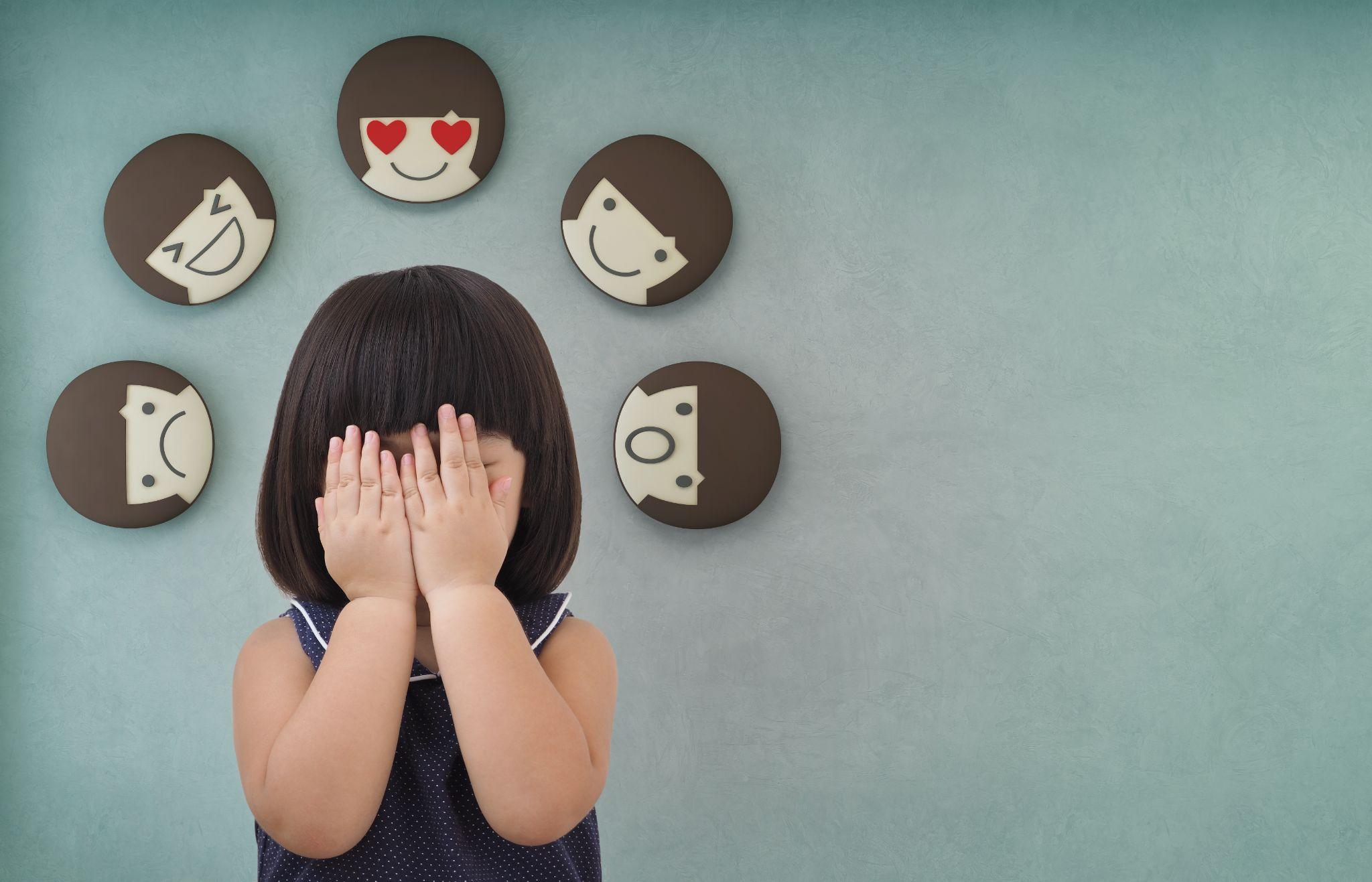
2. recognizing the emotions of others and using words to express them (e.g., happy, sad, angry, surprised)
3. participates in pretend play
4. understands that different people have different desires and preferences
5. understands that people will act to get what they want (e.g. reach for candy)
6. understands the causes and consequences of unsympathetic emotions (e.g. if I hit my brother, my mom will be mad and then she will scold me)

Ways to improve theory of mind are:

1. Use more psychologically relevant words when talking to your child

Using psychologically related words to communicate with children can help children understand their own and others’ psychological conditions more specifically. Examples of psychologically related words are “think,” “pretend,” “know,” “believe,” “feel,” and words related to emotions. Pay attention to what your child is trying to say and then respond. For example, “Ah! You want cake”, “Don’t be afraid! You think I’m gone, but I’m still here,” and “Mommy’s mad at you for hitting your brother. Parents can also explain to their children the psychological situation of others, e.g., “Mei-mei is smiling so much when she receives a birthday present, she should be very excited.

2. Participate in role-playing games with your child

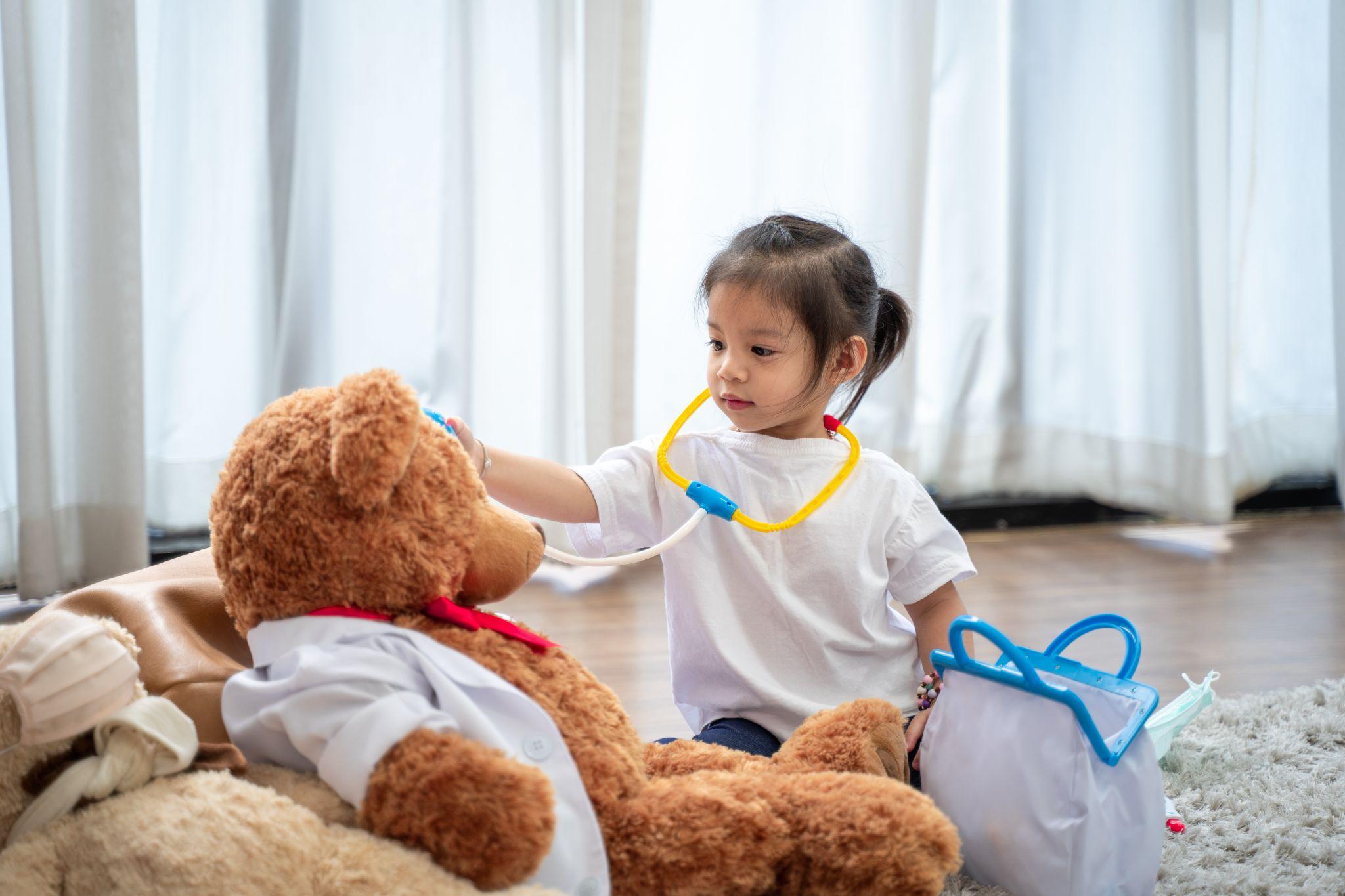
Role-playing games encourage children to put themselves in different situations and characters’ perspectives to draw inferences about their behavior. To begin, children can pretend to be common everyday characters, such as mothers, doctors, teachers, and drivers. Parents should pay attention to the fact that both the words and behaviors in the game should be substituted for the role played. This activity helps children experience a variety of emotions, thoughts and interactions in different social situations, and learn to observe, imitate, anticipate, review and adjust their thoughts and behaviors.

I hope parents can make good use of the opportunity to share and communicate more with their children in daily life, so that they can learn to “look at people’s eyebrows and eyes” (meaning read people’s faces) and become a “mind-reading detective”!

Source:
Hollin, P., Baron-Cohen, S.,& Hadwin,J.(1999). Teaching children with autism tomind-read. West Sussex, England: Wiely Press

Lowry, L.(2015).” Tuning in” to others: How young children develop theory of mind. The Hanen Centre.

Spastics Association of Hong Kong (2005). Connecting: Developing social skills in children with autism. Spastics Association of Hong Kong.

Categories
Parents Zone Parents Zone Parents Zone Parents Zone

To love children, first to love themselves,
3 moves to teach you to maintain the best mental state

system

Written by :Family Dynamics Child Play Therapist
                   Marriage and Family Therapist, Ms. Lee Wai Zi

In today’s society, it is indeed not easy for parents to maintain a good state of mind and body. I have met with many parents and found that the difficulty most parents face is not that they do not understand their children’s feelings and needs, or that they do not know how their behavior affects their children, but that it is difficult to maintain a trusting and optimistic attitude towards their children when they are in a situation. Often, parents become increasingly anxious as they worry that their child’s problems will continue and worsen, and repeat ineffective ways of dealing with their child’s problems.

So, how can parents maintain the best mental state to face the stress and challenges of disciplining their children? Here are some tips for parents to consider:

1. Be more sensitive to your own stress levels
Parents are human beings, so there will be times when they are depressed or physically and emotionally exhausted. The purpose of parents being sensitive to their own mental state is to remind themselves that they need to take care of their own needs first. It is difficult for parents to be sensitive and responsive to the needs of their children when they are in a highly stressed state. Conversely, inappropriate responses may harm the child and damage the parent-child relationship.

2. Use resources effectively to relieve stress
When parents feel stressed, they should try to explore and make good use of their own internal and external resources to regulate their negative emotions. For example, find family members or friends to talk to, do things that can relax you, and find positive thoughts and beliefs to encourage you. The purpose is to give yourself a proper rest and temporary relief from stress.

3. Turn your mind around and reflect
If a parent’s stress continues and increases, professional help is needed. Sometimes, these pressures come from more than just external influences. Parents’ self-worth, worldview, and perceptions of things can affect how we parent. For example, some parents worry that they are not doing enough to fulfill their parental responsibilities and end up pushing their children to study or participate in activities, or even that they are not flexible enough to respond to their children’s needs when they are stressed and negative. If

parents are aware of and take care of their own feelings and needs, they can prevent their negative emotions from affecting the next generation.

Therefore, parents who love their children must first love themselves. Only when parents are healthy and happy can their children grow up healthy and happy.

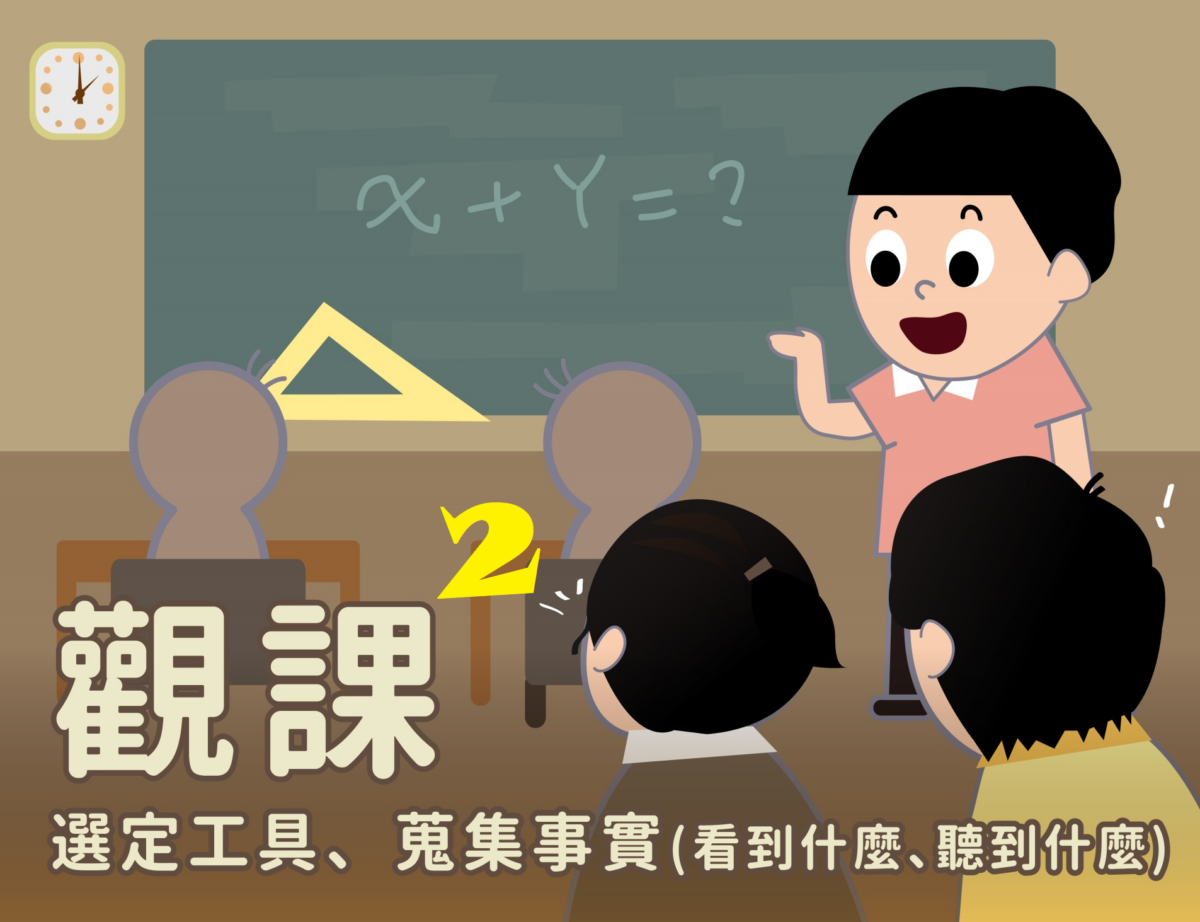
[Class observation activities for parents of high and low classes (2) ]

[Class observation activities for parents of high and low classes (2) ]


In the past two weeks, the parents of the upper and lower classes have been invited to the school to observe the class🏫,

But the second time parent observation can be successfully completed, 🙏🏻

Thanks to the support and participation of parents,

🥰Thank you parents for taking the time to attend !


#K2 #K3 Parents Watching Lessons #Home-School Cooperation #Yan Chai Hospital Shan King Kindergarten # Yan Chai Hospital