What is interactive reading? What are the techniques and steps for engaging in interactive reading with children?
What is interactive reading? What are the techniques and steps for engaging in interactive reading with children?

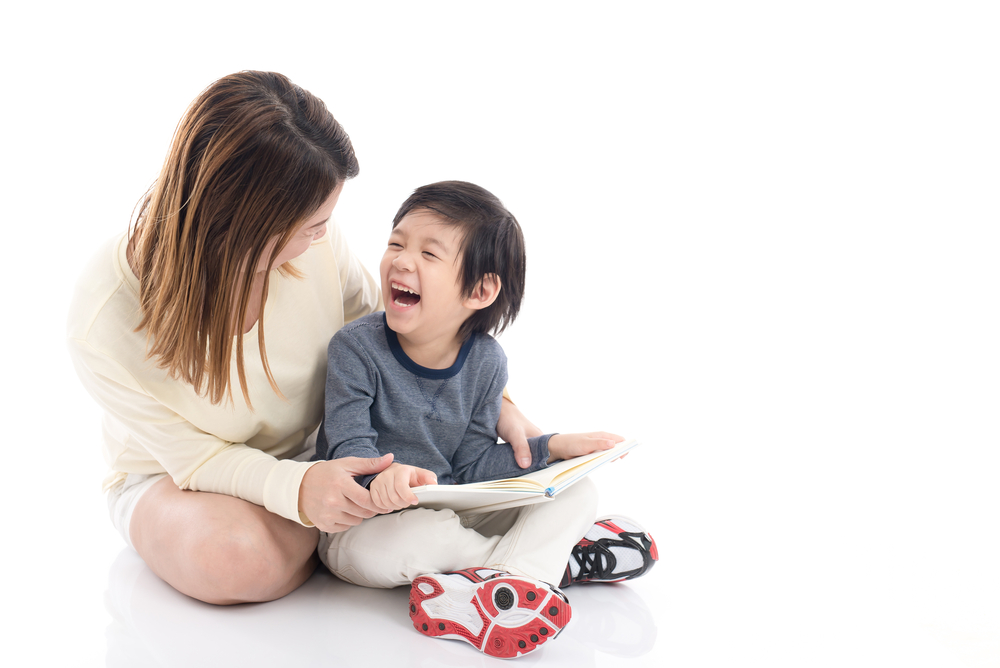
Interactive reading is when parents and children engage in reading through conversation. The main difference between interactive reading and traditional reading aloud lies in the fact that traditional reading aloud often involves parents telling stories to children or, in some cases, parents’ intention to teach children to recognize words, focusing primarily on word recognition. However, the advantage of interactive reading is not just about word recognition; it aims to foster a positive parent-child relationship and help children express themselves through conversation.

In interactive reading, children take on an active role, where they can ask questions and guide the conversation through these questions and answers, thereby enhancing their reading comprehension skills. When parents engage in interactive reading with children, they should consider what questions to ask and what steps to follow. There are various ways for parents to ask questions, and we teach them a prompting framework that includes five different question types, abbreviated as ‘CROWD.’

C stands for Completion, where questions can be posed in a fill-in-the-blank manner. R represents Recall, encouraging children to remember what happened earlier in the story. O denotes Open-ended questions, allowing children to speculate about what might happen next. W represents Wh questions, covering the six Ws: who, what, when, where, why, and how. Finally, D stands for Distancing questions, which prompt children to relate the story to their own life experiences, asking how the story connects to their daily lives.

Interactive reading also follows a framework called ‘PEER.’

The first step is ‘Prompt,’ which refers to the types of questions asked. The second step is ‘Evaluate,’ where after asking questions, you can provide responses to the child. ‘Evaluate’ involves giving positive encouragement to the child, such as praising them when they answer correctly, saying, ‘You did a great job; you listened very attentively.’ If they answer incorrectly, it’s still important to encourage them, saying, ‘You tried very hard!’ and then attempt to find the answer together in the book.

Next is ‘Expand’ (E), which means expanding on what the child says. If a child’s response is brief, you can add adjectives or other details to make the sentence richer. Finally, there’s ‘Repeat’ (R), where after listening to the story, the child repeats the story, which can help improve their oral language skills.


Being a parent can be stressful; it’s important to manage anxiety promptly

Being a parent can be stressful; it's important to manage anxiety promptly

As parents, we have to juggle work and family responsibilities. Under significant stress, it’s easy to experience anxiety. Anxiety is a natural, built-in response, and it can protect us when our lives are threatened. However, excessive worry can lead to physical discomforts like a racing heart, stomachaches, muscle tension, rapid breathing, headaches, trembling hands, sweating, or frequent urination. If not addressed in a timely manner, it can lead to more serious emotional issues and can also affect family relationships.

Here are three ways to reduce anxiety symptoms. First is practicing relaxation through deep breathing, using diaphragmatic breathing. Inhale slowly through your nose for a count of 4, letting your abdomen rise for 2 seconds, then exhale slowly through your mouth for a count of 4. Pause for 2 seconds and repeat this process 5 to 10 times.

The second method is muscle relaxation exercises. Find a comfortable place to sit or lie down, gently close your eyes, and relax all your muscles. Start by shifting your focus to your feet, tense the muscles in your feet for 10 seconds, and then release. Proceed sequentially, tensing and relaxing the muscles in your legs, arms, neck, and facial muscles. 

Lastly, there is imagery relaxation practice. In a quiet place, close your eyes and imagine a comfortable setting, visualizing what you see, hear, smell, and feel for 5 to 10 minutes. Gradually return to the present reality. 

Additionally, it’s important to cultivate a positive thinking pattern in your daily life. Try to see the bright side of things at all times rather than dwelling on unhappy thoughts constantly, which can reduce the chances of developing mood disorders.

Categories
Parents Zone

Everyday life is full of eye use. Adults and children do eye exercises together.

Everyday life is full of eye use. Adults and children do eye exercises together.

Many children today spend a lot of time looking at computers, phones, or reading, which can strain their eyes. There are some acupoint massages that can help children relieve eye strain.

The first acupoint we’ll introduce is the “Zan Chuk” point. It’s located at the very front end of the eyebrows, about half an inch downward, at the corner of the eye socket. Another acupoint is called the “Jing Ming” point. It’s located at the side of the nasal bridge, right in the middle between the two eyes, near the inner edge of each eye. The third point is the “Si Pak” point, which is about 1 inch below the eyes, roughly the width of two fingers apart. It’s in front of the cheekbone, and when you touch it, there should be a slight depression just below the eyes; this is the “Si Pak” point. The last acupoint is the “Shi Chuk Hung” point, located at the very end of the eyebrow. All four of these points can help with dispersing wind, clearing heat, and improving vision.

Once we know the locations of these acupoints, how do we massage the eye area?

First, let’s start with the first point, the “Zan Chuk” point. You’ll use your four fingers to hold down the eyebrows, and then use your thumb to press on the “Zan Chuk” point. The “Zan Chuk” point is right at the very front end of the eyebrows, in the depression at the corner of the eye socket. Hold it with your four fingers and your thumb, and gently rotate 64 times in opposite directions.

The second acupoint is called “Jing Ming” Point, located in the area in front of the inner corner of the eye, between the eyebrow and the bridge of the nose. We use two fingers to gently pinch the bridge of the nose and then slowly massage it up and down, repeating this motion 64 times.

The third acupoint is called “Si Pak” Point. It is located on the inner edge of the cheekbone on our face. In fact, when you touch it, you’ll feel a slight depression. Using two fingers, place them on either side of the bridge of the nose, and you will be able to locate this point. Gently press inside, and you will feel a slight soreness. After locating it, you can also rotate the pressure 64 times.

The fourth acupoint is Shi Chuk Hung Point. To locate it, use your thumbs to first press on both sides of the temples. Then, starting from the Shi Chuk Hung Point, sweep upward to the Shi Chuk Hung Point again, and then continue downward, below the eyes, to the Shi Chuk Hung Point. This constitutes one cycle, and repeat this motion 64 times.

By massaging these four acupoints, you can not only relieve eye fatigue but also improve the blood circulation around the eyes and prevent eye conditions such as nearsightedness. When we do eye exercises, remember to keep our eyes closed throughout the entire process. After completing the eye exercises, it’s also important to keep your eyes closed for 2 to 5 minutes. We typically press each acupoint for 64 times. Why 64 times? It’s because, from the perspective of Traditional Chinese Medicine “eighty-eight sixty-four“, we call it the “first of eight eights” meaning the most important.

Three sentences of family life: Love warms within the home

Three sentences of family life: Love warms within the home

Written by: Education expert, Principal Cheung Jok Fong

Have you ever heard the theme song of a certain TV drama called “Embrace Love”? I really like a few lines from it, as these few words capture the essence of “family.” A family is a place that provides shelter from the wind and rain, your “support.” When you’re feeling “weary,” the door of your home will always be open for you. The mentioned “love” refers to the deep-rooted bond of kinship that’s destined from the moment you were born, stronger than blood. Indeed, what could be more important than family ties? When you’re feeling down, your family will share your burdens, willing to listen to your worries and accompany you through difficulties. When you’re sick, your family will take care of you unconditionally. When you achieve success in your studies or career, they’ll genuinely rejoice and take pride in your accomplishments. This kind of “love” can’t be bought with money.

We all hope that parents and students understand the value of family love. Sadly, this love might come too easily, acquired from birth, and as a result, some don’t fully appreciate it. Sometimes, we see in newspapers that some teenagers would rather linger on the streets than go home; some families argue all day long, turning the home into a battlefield; some even resort to violence over trivial matters, leading to tragedies. The examples mentioned are just the tip of the iceberg, and sometimes I can’t help but feel saddened that a once peaceful home can turn into such a situation.

The Three Sentences of Family Life

How can we build a harmonious family? Pope Francis once proposed the “Three Languages of Family Life” when talking about family, which are the three phrases that should be spoken more at home: “Thank you,” “Please,” and “I’m sorry.”

“Thank you” represents gratitude towards family members. Many times, children are taken care of by their parents from a young age, and they may start to take it for granted. Consider this: do parents have to prepare three meals a day for you? Who washes your clothes and cleans your shoes and socks, providing you with a cleaner living environment? When you’re sick, who takes care of you tirelessly, even getting up at night to give you medicine? Classmates, while your parents are taking care of you, why not say “thank you” more often and help with household chores when you have the time, sharing the workload with them? In fact, when children complete household tasks for their parents, parents can also say “thank you” to them. In today’s society, the notion of elders being on a pedestal is no longer appropriate. You should know that in building a harmonious family, everyone has a responsibility. Don’t think that certain tasks are necessarily assigned to specific family members. Even when you receive help from others, even family members, you can still say “thank you.”

“May I ask” represents respect for family members and polite behavior towards others. Some may think that since we are family, there’s no need to be overly polite in our speech and we can just speak straightforwardly. However, “May I ask” doesn’t just encourage us to speak politely; it reminds us to consider the feelings of our family members in our words. Sometimes, people tend to get heated over trivial matters and believe that they should argue their point forcefully in all situations, even with their family members. But is it really worth it to act this way? As the saying goes, “Winning an argument but losing the family.” Even with close family members, it’s better to choose our words carefully.

As for “I’m sorry,” it represents seeking forgiveness from family members. When you make a mistake, it’s only natural to have the courage to take responsibility and say “I’m sorry” to the person you’ve hurt. At the same time, “I’m sorry” also signifies an opportunity to mend relationships with family members. Sometimes, right and wrong are not easily judged in a few words. Or perhaps, there is no clear right or wrong, but rather differences in values among individuals. Unfortunately, many conflicts arise from such differences. If no one is willing to compromise, relationships can become very tense. As the saying goes, “Give in a little, gain a lot.” Putting down your pride doesn’t mean you’re surrendering, nor is it about compromising on the issue. Instead, it creates a new opportunity to resolve the problem in a better way.

Happy kindergarten, how about elementary school?

Happy kindergarten, how about elementary school?

Written by: Octopus parent, Mr. Leung Wing Lok.

I’ve heard many parents share their experiences, and within the three years of kindergarten, the biggest concern is the transition to elementary school. How much should be done for the child? Should interview classes be arranged? Should extra English lessons or etiquette coaching (not a typo, there are actually training classes for etiquette) be arranged? Among the myriad of skills, is having sixteen talents out of eighteen enough? Or should the child learn niche skills to stand out, like magic tricks or acrobatics? Both parents and children are busy enjoying quality bonding time, especially when every activity has a purpose. As a result, attitudes change, and the child might lose interest in extracurricular classes.

Parents worry about selecting the preferred elementary school and creating resumes.

Especially for K3 students entering the “peak school application season” in June, parents and children face the decision of whether to apply to 10 or 8 elementary schools. As a father, you may hope to only apply to one or two preferred elementary schools, but can you bear the responsibility of “not providing enough education” for your child?

Another challenge is undoubtedly creating the resume, how elaborate should it be? Many schools explicitly state that they accept a maximum of only 4 pages, but you see other parents’ “work reports” for their children that are as thick as prospectuses, with an exquisite level of presentation rivaling Apple’s brochures. You glance at your child, he might not stand out particularly, nor is he an incredibly handsome “lad.” Do you have the courage to limit the resume to just 4 pages?

The choice between “entering elementary school” and “becoming a person.”

What’s most precious isn’t how outstanding the “academic performance” is, but rather the ability to interact with others, to be polite. Of course, what I’m most grateful for is when the teacher specifically instructed my son to “love Daddy, Daddy works hard,” transforming me in my child’s eyes from a “rarely seen person” to a “cherished person to meet.” These teachings might not necessarily aid in entering elementary school, but they hold everlasting value in the parent-child relationship.

Reflecting back, did kindergarten primarily cultivate your child for “entering elementary school,” or for “becoming a person”? Facing the same question, as a parent, is your goal of educating your child solely for the purpose of “entering elementary school”?

Parental Relationships and Child’s Physical and Mental Health

Parental Relationships and Child's Physical and Mental Health

Written by: Marriage and Family Therapist, Child Play Therapist, Lee Wai Zi


Whenever a child is born, it brings about changes to the family. Many times, parents, caught up in taking care of and disciplining their children, can easily overlook the quality of their own marital life. Over time, marital life becomes reduced to a pile of responsibilities and pressures. I once heard a friend say that when he comes home from work every day, it’s like an assembly line of checking his children’s homework, supervising their studies, while his wife takes care of their meals and routines. By the time the two of them can rest, it’s often late at night. Even if there’s still energy left to exchange a few words with his wife, the topic tends to revolve around their children’s academic performance and achievements. Sometimes, there isn’t even enough time left for their own rest, let alone considering their spouse’s needs.


Many couples facing difficulties in their marriage tend to attribute the problems in their relationship to the birth of their children. Generally, people believe that this is due to differing expectations and parenting methods between parents, or unequal distribution of roles and responsibilities in raising children, leading to conflicts in the relationship. However, the vast majority of couples express that they don’t necessarily need their partner to agree with their thoughts or actions. The key issue is that when they face the stress of parenting and various life pressures, they often don’t feel valued, supported, and accepted by their spouse. This leads both sides into a state of loneliness and helplessness, gradually eroding trust and emotional connection.


Differing educational philosophies and methods between spouses are ordinary and natural. However, during the process of parenting, parents are prone to repetitively using ineffective and destructive methods to deal with their differences, inadvertently creating a negative cycle of interaction within the relationship. For example, a wife might complain in front of her husband that the child doesn’t listen, and might even reproach her husband for not helping to share the responsibilities of household chores and parenting. The wife’s expression of dissatisfaction is aimed at making the husband understand her concerns and troubles, and hoping to receive his support and comfort.

However, husbands often only receive criticism and blame from their wives. In order to protect themselves from getting hurt, they might remain silent or explain and defend themselves repeatedly, hoping for understanding and acceptance from their wives. The more husbands explain, the less valued and understood their wives might feel, leading to more accusations. And the more wives accuse, the more helpless husbands might feel, causing them to further evade and defend. Both spouses are participants in this negative cycle of interaction and victims of this cycle as well. If parents don’t promptly address and resolve the deadlock in their relationship, not only will the problems persist and worsen, but it could also ultimately impact their children.


The well-being of the family and the children relies on a strong emotional connection between the spouses. Therefore, for the sake of themselves and their children, it’s worth spending more time nurturing the love between partners. As long as the marital relationship is harmonious, children can naturally grow up healthy and happy.

Categories
Parents Zone Parents Zone Parents Zone Parents Zone Parents Zone Parents Zone Parents Zone Parents Zone Parents Zone

Does organic food always have nutrition?

Does organic food always have nutrition?

Written by: Registered Nutritionist (Public Health) (UK), Ng Pui Yu

Many families choose to consume organic foods such as fruits, vegetables, and eggs. When asked about the reasons for purchasing organic food, most people respond with, “Because organic food is safer and more nutritious.” In this issue, the author will educate everyone about what organic farming is.

What is organic farming?

Organic farming refers to agricultural practices that replace synthetic substances with methods involving agriculture, biology, or machinery. It avoids using chemical fertilizers, pesticides, or genetically modified crops and instead relies on local natural resources while adhering to the laws of natural ecology. The scope of considerations is broad, for example: an organic production area on a farm must be at least 2 meters away from non-organic areas to prevent crop contamination.

Crop and Variety Selection and Diversity:

l   Seeds or propagating material used for organic cultivation should be certified as organic.

l   Farms must practice crop rotation and intercropping while striving for diversification to avoid monoculture. 

Nutrient Management:

l   Fertilization should be applied appropriately to prevent nutrient excess and environmental pollution.

l   The sources, quality, quantity, and application methods of fertilizers used on the farm should be ecologically benign.

l   Soil fertility should be restored through fallow periods.


l   The use of chemically synthesized fertilizers, human excreta, sewage sludge, and chemical waste is prohibited.


Management of Pests, Diseases, Weed, and Crop Growth:

l   Implement appropriate fertilization and irrigation management.

l   Utilize physical methods, including manual techniques, fencing, light, sound frequency, heat, etc.

l   Plant crops that have pest control properties (including pest repellent and attracting natural enemies).

l   Prohibit the use of chemically synthesized herbicides, fungicides, insecticides, and other pesticides.  

From this perspective, organic farming emphasizes ecological conservation in the cultivation process. However, when it comes to nutritional value, there isn’t a significant difference between organic and non-organic foods. Furthermore, there is no evidence to suggest that children who consume organic foods are healthier or more intelligent. Of course, due to the environmental friendliness and reduced use of chemical pesticides in organic farming, I also encourage everyone to make more organic choices! 

Conventional Farming vs. Organic Farming 


Conventional Farming

Organic Farming

Safety

More commonly uses chemical pesticides and fertilizers

l   Fewer chemical pesticide

l   Emphasizes ecological environment

l   Uses non-genetically modified materials

Nutrition

No significant difference

Health

Also need to pay attention to the principles of a healthy diet: low fat, low sugar, and low salt.


How to enhance children’s resilience?

How to enhance children's resilience?

Source: Education expert, Cheung Jok Fong

I attended a lecture by “Warrior of Regeneration,” Miss Yeung Siu Fong, earlier. She shared her experience of losing both hands in an accident at the age of nine. However, she did not give up and instead equipped herself more actively. With hard work, she not only became a swimming athlete in the Asian Games but also started art creation by using her feet in place of hands. She successfully enrolled in the Hong Kong Academy of Arts and became an inclusive artist. In 2011, she was selected as one of the “Ten Most Touching Hong Kong Figures” and became a “Hong Kong Spirit Ambassador” in 2013. After the lecture, I asked some classmates for their opinions, and they all expressed that if they encounter difficulties in the future, they will no longer be afraid because they believe that there is always a way to solve things and they want to face difficulties as positively as Sister Siu Fong.

Cultivating resilience from an early age

In the journey of life, we will inevitably encounter adversities. At that time, how should we face them with the right mentality and approach? Nowadays, parents often invest a lot of effort in their children’s academic performance, hoping that they can “win at the starting line.” However, while pursuing academic excellence, it is equally important to cultivate a spirit of perseverance. Unfortunately, some people choose different ways to escape when faced with difficulties, and some may even be so disheartened that they end their precious lives, which is truly regrettable. As educators, we have a responsibility to help students enhance their ability to cope with adversity, and this resilience needs to be cultivated from an early age.

Three key elements to enhance resilience

Experts point out that there are three key elements to enhance resilience: “optimism,” “efficacy,” and “belongingness.” “Optimism” is easy to understand literally; it means having hope for the future and believing that there is always a way to solve problems. This is the attitude one should adopt when facing difficulties. “Efficacy” includes how to manage emotions and establish problem-solving methods when facing challenges, which represents the ability needed to overcome difficulties. “Belongingness” refers to the care and support from people around the individual in question.

For children, the roles of family members and teachers are especially important. For example, when a child faces academic difficulties, if they can feel the care and support from their parents and teachers, and not be treated with disdain, scolded, or spoken to harshly because of low grades, but instead walk alongside them and seek ways to improve their academic performance, it will make them feel that their family and school are a place of “shelter from the storm.” In short, “belongingness” is the cornerstone for establishing “optimism” and “efficacy,” and it serves as the motivation provided to those facing challenges.

Cultivating resilience starts with small things

So, how can we cultivate children’s resilience in daily life? Should we wait until they encounter setbacks to teach them? In fact, we can start with some small things. Take skipping rope as an example. No child is born knowing how to skip rope. At this time, parents can encourage them and let them believe that they are capable of learning, which is the aforementioned “optimism.” Additionally, parents can assist from the side or demonstrate the correct way to skip rope, making them feel that their parents are accompanying them and going through difficulties together, which is the “belongingness” mentioned earlier. After the child experiences a taste of success after a few attempts, they can try to figure out how to coordinate their body and master the technique of skipping rope on their own, which is the “efficacy” mentioned above.

In conclusion, we can teach children from an early age to face difficulties with an optimistic and positive attitude and provide them with opportunities for self-challenge. More importantly, let them feel the support and care from the people around them.


Happiness is actually simple – enjoy quality time with children

Happiness is actually simple – enjoy quality time with children

Written by: Marriage and Family Therapist, Child Play Therapist, Lee Wai Chee

Everyone hopes to find happiness, and parents are certainly no exception. Many times, parents are even willing to sacrifice their own immediate needs and happiness, hoping to exchange them for their children’s “happy life” in the future.

Most parents understand that their children’s future “happiness” is by no means guaranteed one hundred percent. However, many parents believe that not striving today will inevitably lead to failure tomorrow. In addition, the social atmosphere advocates “doing more is better than doing less,” and even considers not doing anything as laziness and passivity. As a result, all parents and children find themselves doing more and more, gradually losing their direction.

In online discussion forums, I often see some parents criticizing society and the education system for putting excessive pressure on children, stifling their growth space. However, on the other hand, they helplessly push their children to do various exercises every day, showing their helplessness and sense of powerlessness. The contradictions and dilemmas faced by parents are understandable, but these fears and anxieties can cause parents to easily miss the insights that children give us.

When a baby is born, they live a simple, direct, and natural life every day. When they are hungry, they eat; when they are full, they sleep; and when they wake up, they play. They explore the world in their own way and interact with the people around them. They laugh heartily when they are happy and cry out loudly when they are sad. Children tell us that human needs are actually quite simple, and as long as these needs are satisfied, they will be happy. It’s just that the adult world has become increasingly complex, and people’s desires have grown, causing adults to forget even their own needs and, as a result, become increasingly unhappy. Ironically, we still assume that we understand the “key” to a “happy life” and teach children how to find happiness.

Today’s society is filled with the anxiety and unease of adults who fear being marginalized by society and worry that their stable lives are threatened. As parents, they are even more concerned about their children’s future lives. In fact, children understand the essence of happiness best because they naturally live freely and at ease. However, somewhere along the way, parents hope that their children can adapt to the distorted rules of the real world as soon as possible, inadvertently erasing their natural and childlike qualities.

A child’s growth takes time. If parents can observe their lives with a calm mind, be patient, slow down, and enjoy every moment spent with their children, they may rediscover that happiness is not in the future but in the present moment.

Long bathing time, eczema will become problematic and requires a long time to heal

Long bathing time, eczema will become problematic and requires a long time to heal

Written by:YEUNG Ming Ha, Registered Chinese Medicine Practitioner


Recently, a parent uploaded pictures of their daughter suffering from eczema on a social media platform. Looking at the little girl’s red and swollen hands and feet, and her skin all irritated, indeed, it’s heartbreaking. As a result, parents all over the city are now sharing their secret remedies to deal with eczema because many of them or their children are also affected by eczema, and they often suffer during seasonal changes.


Eczema is a common allergic dermatitis and is not contagious. In Traditional Chinese Medicine (TCM), eczema is referred to as “wet sores” and is a prevalent skin condition in Hong Kong. The internal factors contributing to eczema include the individual’s constitution, emotional state, and dysfunction of the body’s organs, while external factors involve wind, dampness, and heat obstructing the skin. When a person has a weaker constitution and a lower immune system, wind, dampness, and heat pathogenic factors may invade the skin, resulting in eczema or exacerbating existing eczema issues. Eczema can occur on any part of the body, such as the ears, head, face, hands, navel, and lower legs, but it usually appears symmetrically. Patients often feel intense itching, and scratching can lead to skin abrasions, oozing of pus, and even infection. The condition tends to recur, making the skin rough and the scabs raised. To deal with eczema, it’s essential to start by addressing these three small habits:

Shorten bathing time.

When eczema flares up, patients often can’t resist scratching. Hands are the most susceptible to bacterial contact and harbor the most microorganisms. Therefore, it’s important to avoid the habit of frequently touching the face to prevent exacerbating skin inflammation. Additionally, patients should refrain from using products with high alcohol content frequently, as the chemical components can irritate and weaken the skin’s natural barrier. Furthermore, due to the itching sensation on their skin, patients tend to wash their hands and take long baths, mistakenly thinking it can relieve itching and provide a sense of cleanliness. However, excessive cleaning can actually damage the skin’s sebum layer and stratum corneum, compromising the skin’s natural protective barrier and worsening eczema problems. Therefore, it is recommended for patients to shorten their bathing time, ideally not exceeding 3 minutes. At the same time, they should choose hypoallergenic skincare and bathing products to minimize irritation to the skin. For severe cases of eczema, it is suggested to only cleanse the armpits, lower body, and areas prone to sweating.


Here, I am introducing an anti-allergic formula: The ingredients include Fang Feng (防風) 6 qian, Ku Shen (苦參) 6 qian, and Sheng Gan Cao (生甘草) 3 qian. Boil them with strong fire for 30 minutes, then use it to rinse the sensitive areas. It has excellent moisturizing and itch-relief effects.


Good lifestyle and hygiene habits.

Patients’ living environment needs regular cleaning, and they should frequently change bedsheets and close-fitting clothes. Moreover, patients should wear loose and cotton clothes, avoid wearing tight clothes made of wool, and ensure no chemical residues like detergents remain on their clothes. Regarding daily routines, patients should go to bed and wake up early, avoid staying up late, maintain a balanced diet, exercise adequately to boost their immune system, and reduce the chances of triggering eczema. After exercising, they should immediately wipe away sweat and change into dry clothes to keep the skin clean and dry. Of course, the most crucial aspect is maintaining a positive mindset to reduce stress.

Dietary Restrictions Effectively Prevent Eczema

The onset of eczema is closely related to certain food sensitivities, so dietary restrictions are essential in the treatment of skin sensitivity. During the treatment of skin diseases, patients should avoid consuming “triggering foods.” “Triggering foods” are those that can induce rashes and worsen the condition in skin disease patients. These triggering foods mainly include seafood, beef, sweets, spicy foods, and alcoholic beverages. Skin diseases are often caused by the accumulation of “dampness” and “heat,” leading to the formation of “toxins.” Patients with skin conditions usually have a constitution characterized by congenital weakness of the spleen and stomach. When they consume excessive amounts of spicy foods, shrimp, crab, seafood, and other highly stimulating foods, or when they consume a large amount of raw and cold food during the summer, it can lead to the accumulation of damp toxins in the body. This can easily cause abnormalities in spleen and stomach functions, increasing the likelihood of developing eczema.